Hi, I’m Giovanni!
I’m a Chartered Engineer (CEng) and an academic at Northumbria University (Newcastle upon Tyne, UK), where I teach the next generation of professionals working in construction, dealing with both new-build and historic buildings.
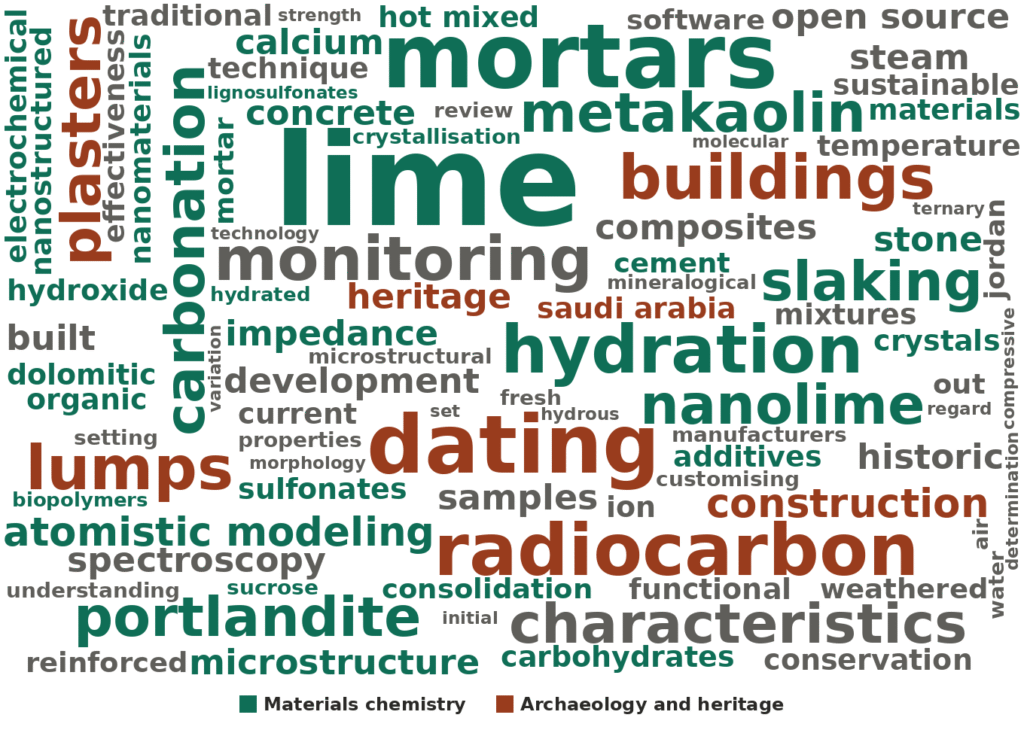
My research uses the chemistry of lime-, gypsum-, and clay-based binders to develop the next generation of sustainable construction materials, alongside methods to date and characterise historic mortars for archaeological and heritage science.
I see the development of new materials and the study of historic ones as deeply connected. Applying scientific understanding to the building materials and construction knowledge developed by past societies over millennia can help identify real solutions to today’s environmental challenges. Lime, gypsum, and clay mortars aren’t just historical curiosities. They sit at the intersection of some of the most pressing challenges in modern materials science:
- Biomimicry — I collaborate on research using enzyme-based biomimetic strategies to boost lime’s ability to capture CO₂ as it hardens, connecting centuries-old material knowledge to cutting-edge bio-inspired science.
- Circular Economy — lime, gypsum, and clay mortars can be at the core of a more sustainable construction industry and implement the true principles of circular economy.
- Climate Adaptation — the chemistry of hardened lime mortar, down to its isotopic makeup, can trap traces of past pollutants. That gives us a window into historic urban pollution and better data for climate models.
As an academic, my motto is docendo discimus (“by teaching, we learn”). Teaching (in a broad sens) keeps me close to the questions that matter, and research keeps my teaching grounded in real problems.
If any of this interests you, have a look around, or get in touch.

Giovanni Pesce
@gio.fishEuropean citizen with an Italian passport. Academic in a UK institution. Interested in new and historic buildings, with sustainability at their core. Firmly believer in the motto: "Docendo discimus"


The 2025 Annual Report was formally accepted, and a recording of the AGM is now available to view.
Read more 👇
iom3.info/4cOX8kS